Parthenon Temple on the Acropolis
Understand why the Parthenon became the defining image of classical Greece, from its sacred purpose to its revolutionary marble design and lasting architectural influence.

Understand why the Parthenon became the defining image of classical Greece, from its sacred purpose to its revolutionary marble design and lasting architectural influence.
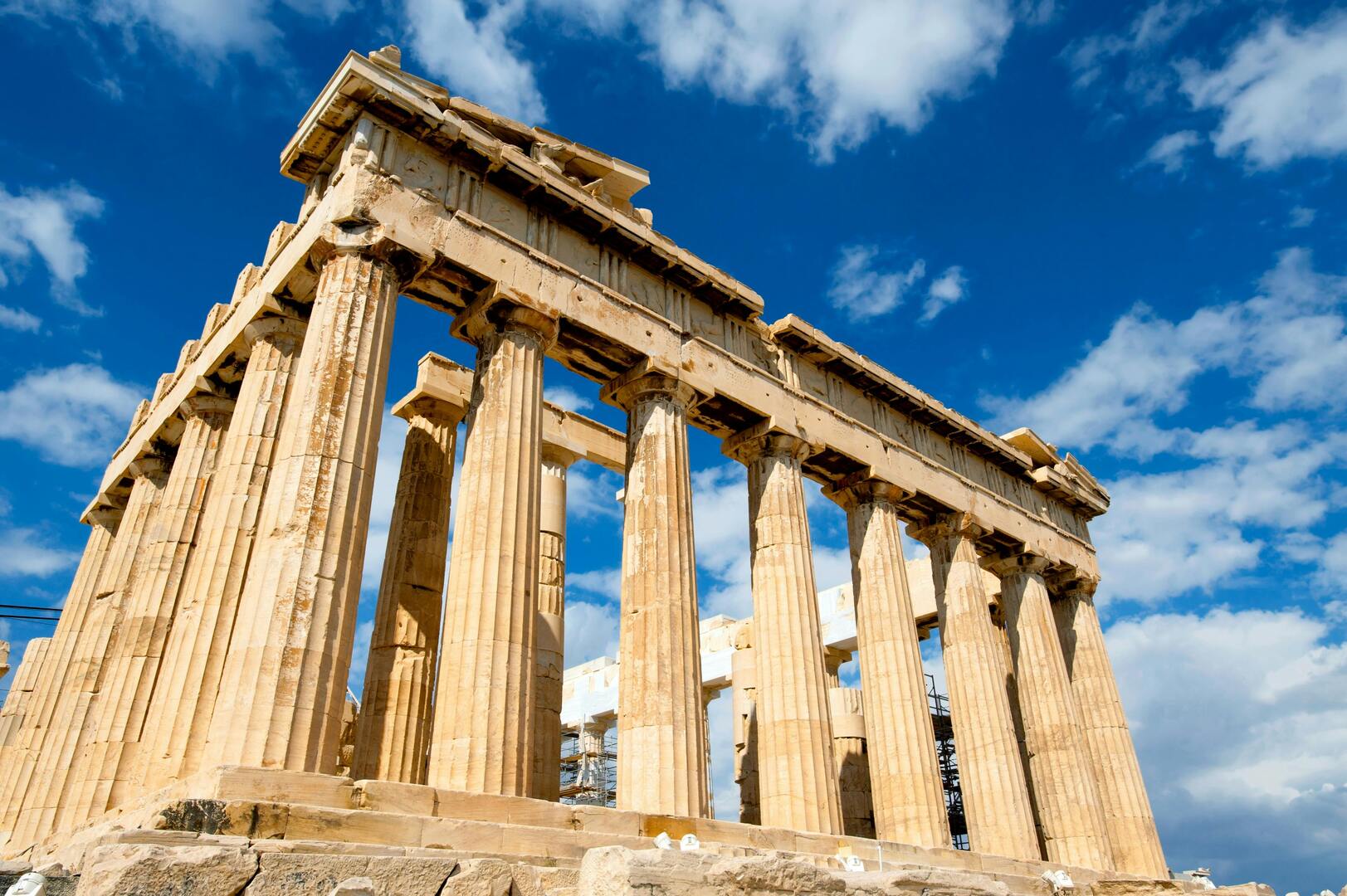
The Parthenon was built during the height of Athenian power and remains a benchmark of classical proportion and civic identity.
The temple includes subtle refinements in curvature and column profile that produce visual harmony from multiple viewpoints.
Today it also demonstrates careful long-term restoration, where scholars and conservators protect original stone while preserving readability.
Plan your Acropolis visit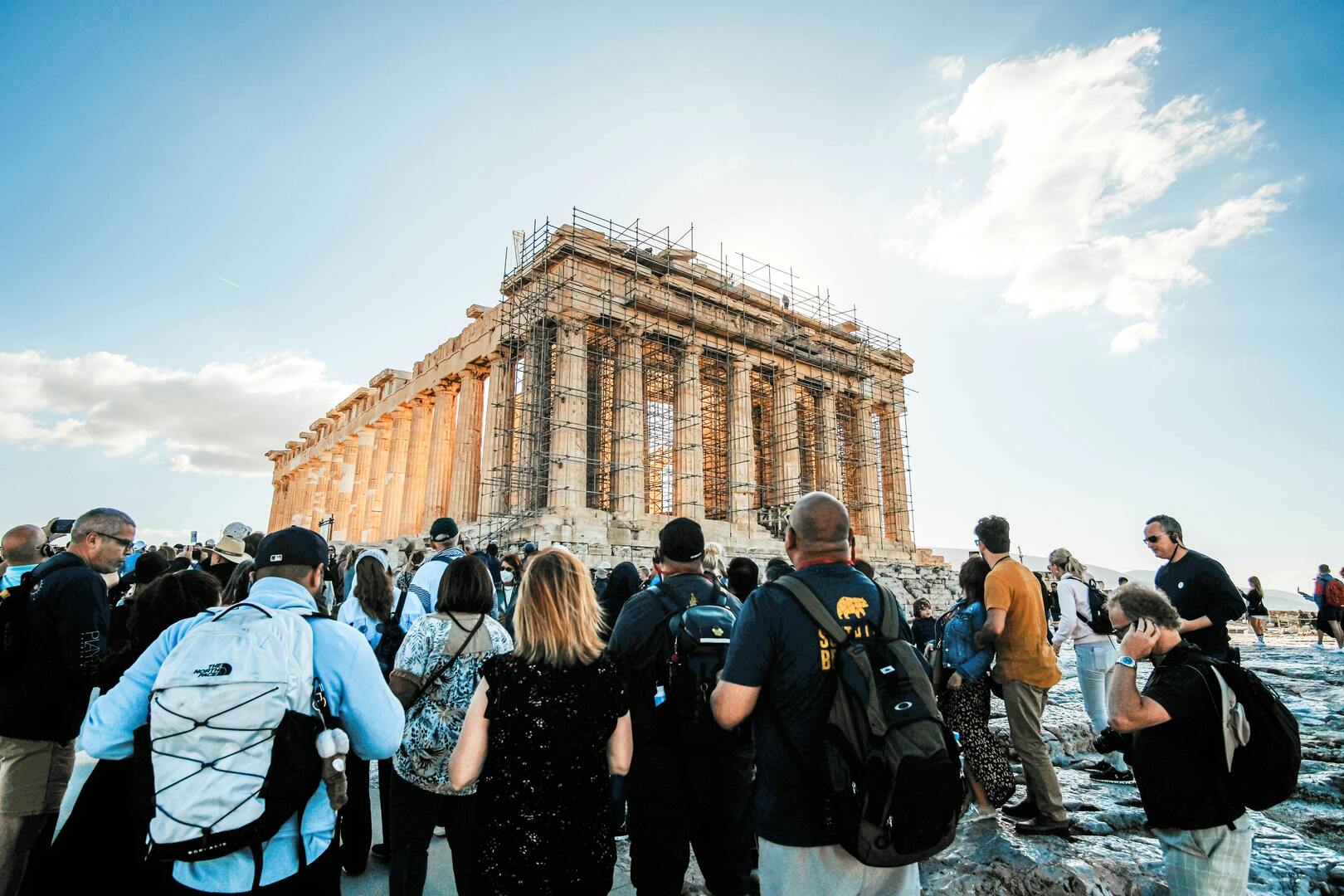
Geometric corrections in platform and columns create the balanced appearance that made the monument famous.
It honored Athena and projected the confidence of classical Athens through scale, craft, and symbolism.
Pediments, metopes, and frieze once formed a unified narrative of myth, ritual, and public identity.
Modern restoration carefully reintegrates original elements and documents each intervention.
The structure is Doric at core but integrates features that show design experimentation.
Pentelic marble gives the temple a luminous tone that shifts throughout the day.
Later use as church and mosque, plus 1687 damage, shaped what visitors see now.
Interpretive context helps connect surviving remains to the original architectural intent.
